
Every school day, more than 30 million students across the U.S. depend on the National School Lunch Program. For many of...
2 min read
TL;DR
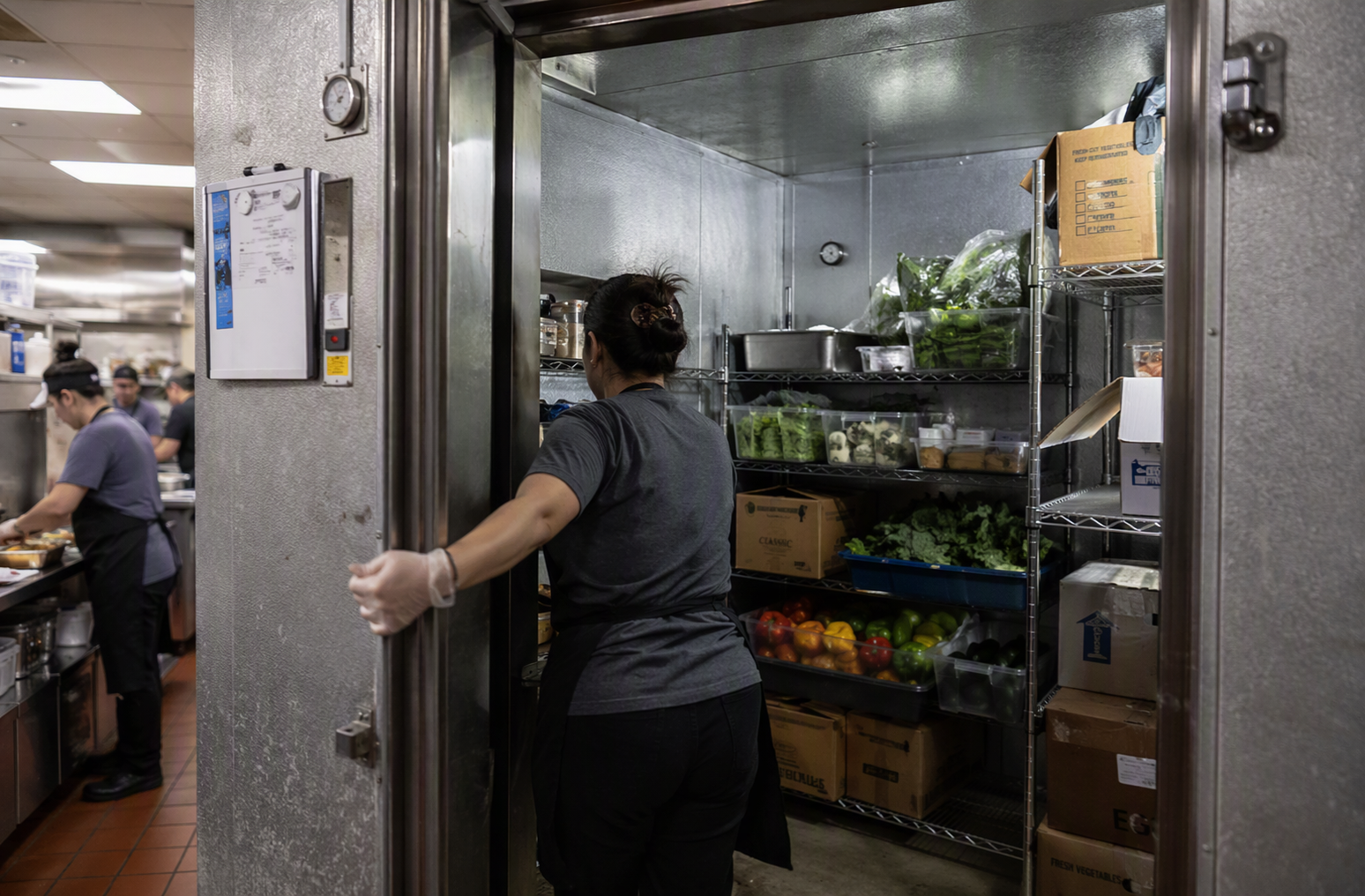
- Most refrigeration issues in schools are not sudden failures. They come from systems stuck in constant recovery
- Frequent door openings, inconsistent loading, and airflow issues are the biggest contributors
- Stability improves when kitchens control load timing, airflow, and maintenance consistency
Refrigeration Problems in Schools Rarely Start as “Failures”
In school kitchens, refrigeration doesn’t usually fail all at once.
It degrades.
Temperatures still hit setpoints, but recovery takes longer. Units run more often. Fluctuations increase during lunch prep and service. Most of the time, this goes unnoticed until product loss or a food safety concern forces attention.
In high-volume K-12 environments, that pattern matters. You are working within tight service windows, high door traffic, and limited time to recover between cycles. If the system cannot stabilize, risk builds quietly in the background.
The Real Issue: Systems Stuck in Constant Recovery
During peak production, refrigeration systems are under continuous demand.
Doors open repeatedly. Product is loaded in waves. Warm air enters faster than the system can remove heat. Instead of cycling normally, the system stays in recovery mode for extended periods.
That leads to:
- Temperature swings during service
- Longer run times and increased wear
- Reduced ability to handle unexpected load
A system can appear to be “working” while still operating under strain.
That gap is where most problems start.
What Creates Instability in School Kitchens
Three patterns show up consistently in K-12 environments:
1. Continuous loading instead of staged loading
When product is added throughout the morning, the system never has a chance to stabilize. Even small additions create repeated disruption.
2. High-frequency door access during peak periods
This is unavoidable to some extent. But when access is unstructured, it amplifies heat gain and delays recovery.
3. Gradual airflow restrictions
Dirty coils, blocked vents, or worn gaskets don’t cause immediate failure. They reduce efficiency over time, which becomes critical during peak demand.
Individually, these issues seem minor. Combined, they create conditions where systems cannot maintain consistency when it matters most.
What Actually Improves Refrigeration Stability
The improvement is not about one fix. It is about reducing unnecessary strain.
Create defined loading windows
Group deliveries and product movement so the system has time to recover between events. Even short recovery periods improve stability.
Limit avoidable door openings during peak prep
Small changes in workflow can reduce repeated access to the same unit.
Prioritize airflow as part of routine cleaning
Coils, vents, and clear airflow paths directly impact recovery performance. This is one of the most overlooked factors in system stability.
Watch for fluctuation, not just final temperature
A unit that reaches the right temperature but swings throughout the day is already showing signs of strain.
Why This Matters More in K-12 Environments
School kitchens operate differently than most foodservice settings.
- Service windows are fixed
- Volume is concentrated into short periods
- Staffing and time are limited
There is little margin for inconsistency.
At the same time, many districts are handling more fresh product and increased storage demand compared to just a few years ago. That raises the importance of maintaining stable refrigeration conditions throughout the day.
Stable Refrigeration Is a System Outcome
Refrigeration performance is not just about the equipment.
It reflects how the system is used throughout the day.
When loading is staged, airflow is maintained, and demand is managed during peak periods, systems stabilize. When those factors are inconsistent, even well-designed systems are forced to operate under continuous strain.
The difference is not always visible immediately. But over time, it shows up in reliability, energy use, and product protection.
Frequently Asked Questions
How can you tell if a refrigeration system is under strain?
If units run continuously during peak periods or temperatures fluctuate throughout the day, the system is likely staying in recovery longer than it should.
What is the first thing school kitchens should adjust?
Loading patterns. Staging product instead of adding it continuously gives the system time to stabilize.
Why does airflow matter so much?
Restricted airflow reduces how efficiently heat is removed. During peak demand, that directly impacts recovery time.
Need help managing your refrigeration program? Connect with the RDT team.
Keep Reading
.png?width=500&name=school%20lunch%20(Facebook%20Post).png)
Two or three weeks before students return, a nutrition director walks the kitchen and listens. One walk-in is pulling do...
In foodservice, peace of mind is rare. Each day brings a unique challenge. For foodservice operators relying on a wide r...