
Two or three weeks before students return, a nutrition director walks the kitchen and listens. One walk-in is pulling do...
2 min read
Refrigeration drives foodservice operations, but its role extends into many other industries. Hospitals depend on it to protect medicine and blood supplies, florists need to preserve flowers, and archives rely on stable environments to keep sensitive materials intact.
When refrigeration systems fail, the damage is immediate and costly. Product spoils, compliance breaks down, and reputations suffer. Understanding the refrigeration cycle and installing the right system size keeps products safe and operations running.
Understanding the Refrigeration Cycle
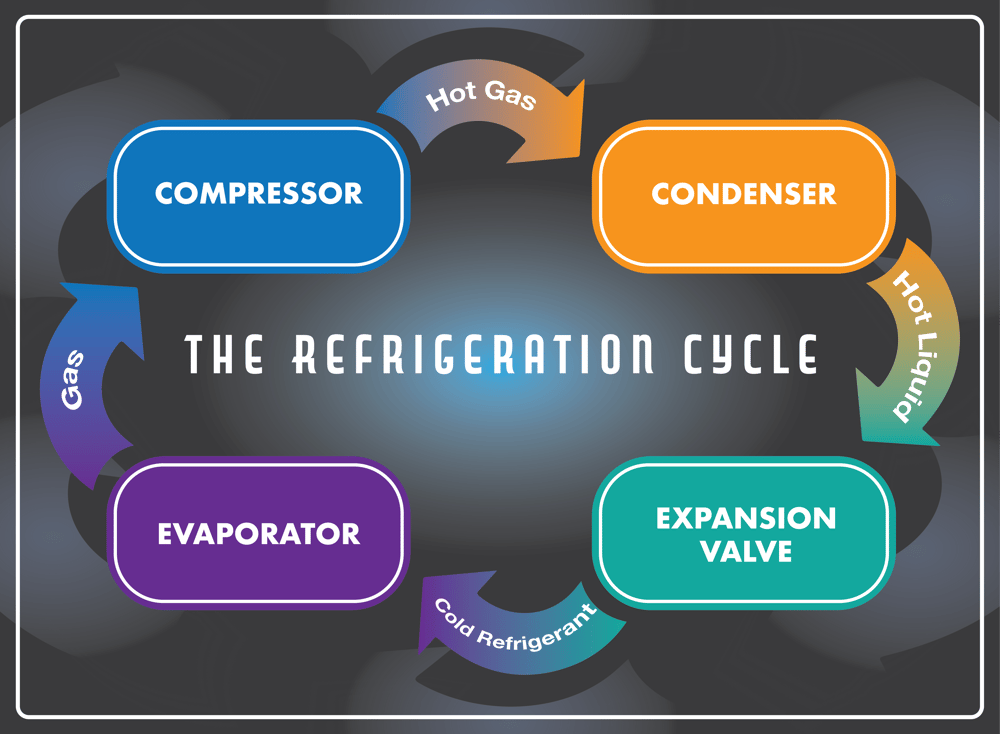
Many laypeople are surprised to learn that the refrigeration cycle doesn’t create cold. It actually removes heat. By controlling refrigerant pressure, heat moves out of the cooled space and is released outside. This cycle repeats nonstop through four key components that each play a specific role.
The compressor starts the process by squeezing the refrigerant into a high-pressure gas, which raises its temperature. That hot gas enters the condenser, where air or water cools it until it condenses into a liquid. The condenser must stay protected from corrosion to keep doing its job, so RDT applies protective coatings that extend its life in harsh environments.
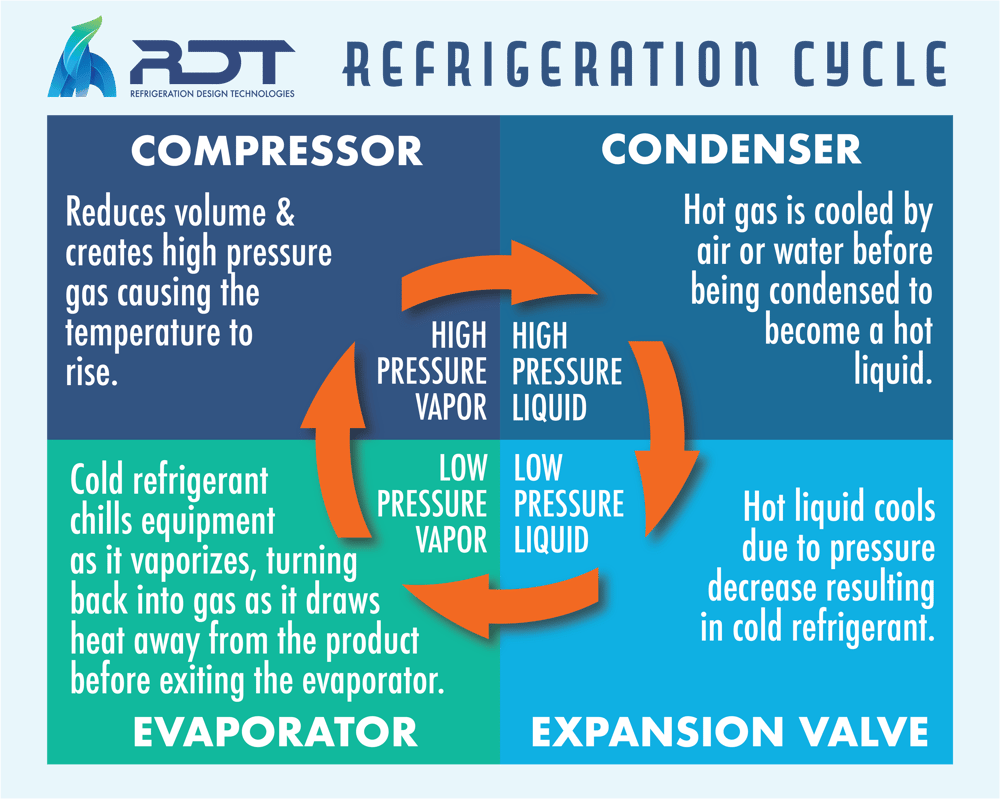
From there, the refrigerant flows through the expansion valve. The sudden pressure drop decreases the temperature, leaving a cold liquid ready to absorb heat. At that point, the evaporator pulls heat from the walk-in or storage space. As the refrigerant soaks up heat, it vaporizes and loops back to the compressor. This constant cycle keeps environments consistently cool and reliable.
How RDT Sizes Refrigeration Systems
System sizing is never a one-step calculation. RDT project managers evaluate multiple factors to match each installation to its surroundings.
The walk-in dimensions establish the baseline, but they are only the start. In hot climates, condensers must often be oversized to manage extreme conditions. In cold climates, systems may require added cabinet heat so refrigerant stays in liquid form. Coastal regions bring salt air that corrodes aluminum fins, so RDT specifies protective coatings where needed. At higher elevations, evaporator coils run differently, and adjustments ensure steady performance.
By factoring in climate, location, and environmental stressors, RDT delivers refrigeration systems built for long-term reliability, whether they serve a restaurant, a hospital, or a flower shop.
Refrigeration Solutions From RDT
Eco-Cool Series: Eco-Cool uses a single digital compressor that adjusts automatically to match the load. This technology reduces refrigerant use, trims installation costs, saves space, and delivers built-in redundancy for dependable operation.
Eco-Smart Series: Eco-Smart controls evaporator cycles with precision. Instead of running unnecessary defrosts, it triggers them only when needed. This approach saves energy, extends equipment life, and can be monitored remotely. Existing systems can also be upgraded to take advantage of Eco-Smart technology.
MultiRak System: MultiRak combines efficiency and redundancy by reducing the number of compressors without sacrificing performance. This design saves space, lowers refrigerant needs, and still protects operations with backup capacity.
PremierPak System: PremierPak arrives pre-assembled and factory tested, so installation is quick and downtime is minimal. The plug-and-play design ensures consistent performance from day one, giving operators a dependable solution without delays.
FlowPak System: FlowPak centralizes refrigeration for facilities with multiple fixtures. Built for reliability and easy service access, it supports complex cooling needs while keeping operations streamlined.
FAQs About Refrigeration Cycles
What is the purpose of the refrigeration cycle?
The refrigeration cycle removes heat from a space to keep products cold. It moves refrigerant through the compressor, condenser, expansion valve, and evaporator to maintain consistent temperatures.
How does RDT determine the right size refrigeration system?
RDT evaluates walk-in dimensions, climate, elevation, and location factors such as salt air near the ocean. This ensures each system is designed for reliable, long-term performance.
What types of refrigeration systems are commonly used in commercial settings?
Common options include centralized rack systems, pre-assembled packages, and smart technologies that reduce energy waste while maintaining dependable cooling.
Is the refrigeration system at your business the right one to keep operations running smoothly? Take our quick review to find out:
RELATED BLOGS
.png?width=500&name=rdt%20blog%20post%20(3).png)
We all want zero waste, especially in restaurants and other forms of foodservice operations. As a result, many restauran...

In terms of foodservice, the Hazard Analysis Critical Control Point (HACCP) program put in place by the Food & Drug Admi...